

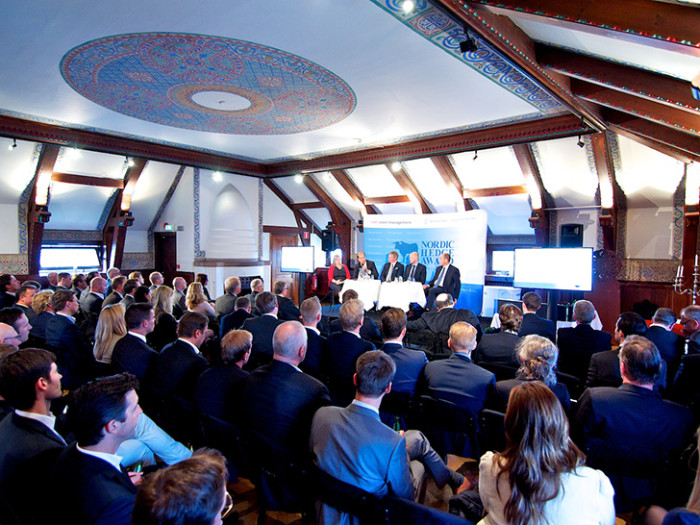
Stockholm (HedgeNordic.com) – The panel discussion at this year’s Hedge Nordic Awards focused on key ingredients in the manager selection process of some of the most successful fund of hedge funds and multi-managers.
The four panellists discussed their view of manager selection and agreed that one of the key points is to understand the investment process of the underlying managers.
Otto Francke of SEB said, “For me it is crucial to understand the investment process and the risk factors driving performance. It is equally important that the manager has thought about why he invests as he does and that he takes intended bets in which he has an edge.
Erik Lundkvist of Coeli Asset Management agreed, emphasising the importance of quality and consistency. “It should be easy to understand what risks the manager takes to create the return and how likely it is that the historical returns can be repeated,” he added.
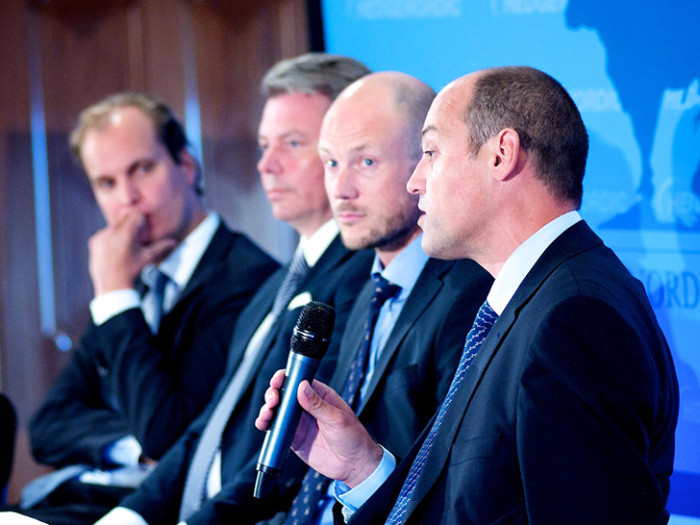
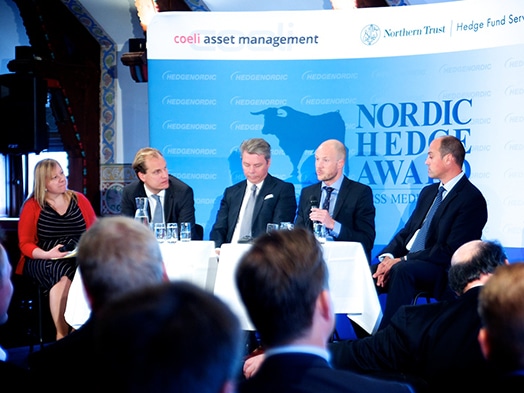 Left to right: Pirkko Juntunen (HedgeNordic), Otto Francke (SEB), Rolf Hagekrans (Merrant), Erik Lundkvist (Coeli), Kris Raecke (UBP)
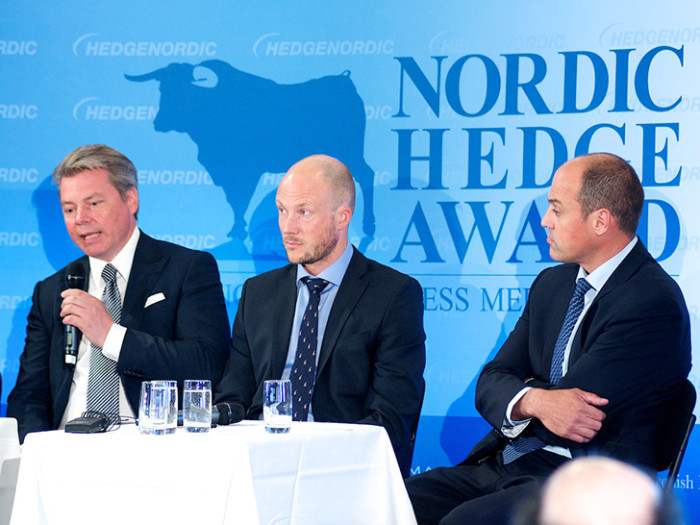
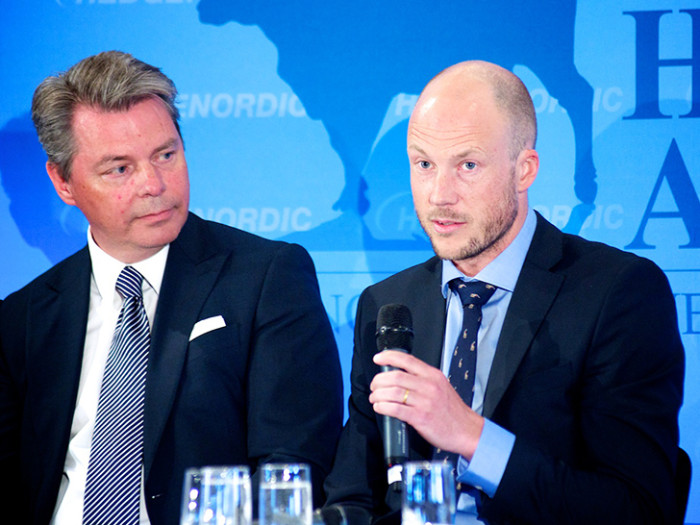
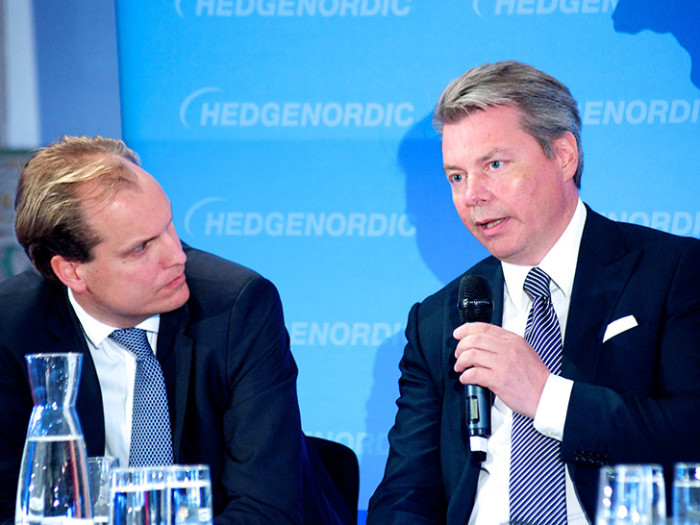
Rolf Hagekrans of Merrant Fonder, noted that alpha-generation regardless of directional movements and volatility in global equity and bond markets is vital, as is proven track record and experience. He added: “Merrant Alpha Select invests in fund managers whom apply the same strategy over and over without indulging in opportunistic changes of investment strategy and position taking.”
Kris Raecke of UBP, said; “We distinguish between investment aspects and operational due diligence. In the case of the former, quality, consistency, competitive advantage and being repeatable over at least the medium term and the case of the latter, no compromise policy with very strict set of rules.” He also noted that if he’d have to pick a single factor it would be ODD.
Since the crisis fund of hedge funds have struggled to pick up new business and competition is heating up even more with consultants also encroaching on the FOHF turf. The panellists, however, believe there is still a role for the FOHF and multi-managers in the new post-crisis environment.
Lundkvist admitted that the environment is more challenging but is adamant that FOHF is still the only way to get access to good funds for the retail customer. “We have modified our business model; attracted new HF teams and started a single fee layer FoHF with internally managed HFs,” he added.
The panellists also said that more customisation and tailor-made solutions are more apparent now and that fees have been coming down. Francke said FOHF have to work harder to demonstrate what their edge is than before the crisis.
The panellists had a different view on smaller managers as their business models differ. For instance, Hagekrans at Merrant said they do not invest in smaller managers because of the concentrated nature of their portfolio, where they have to avoid manager risk.
Raecke said UBP does invest in smaller and younger managers, but would typically ask them to be on-board the UBP managed account platform for ODD reasons. “We typically would at least like USD 50M capacity. Hence, we would typically require at least about USD 200M AUM,” he added.
Francke pointed out that barriers to entry in the industry is much higher today due to fixed costs and investor requirements and it takes longer for investors to push the button. ”If you want to attract institutional capital you need a backer/seeder to provide you with catalyst capital and business stability,” he said.
Lundkvist said: “We are able to invest in smaller and fairly new HFs. Statistics show that smaller and younger funds outperforms larger and older funds, but you have to sherry pick of course. One piece of advice is not to forget distribution; good performance alone doesn’t sell a fund.”
In terms of looking at specific regions, such as the Nordics, the panellists said the focus goes beyond geography and the criteria for selecting managers is global where managers, irrespective of their location, are judged against each other. Lundkvist concluded that one of the advantages of Nordic hedge funds is the proximity to managers but that Coeli also broadens its search internationally beyond the Nordics if they cannot find what they are looking for.
![Logo_HN_620x90_2014_v2[1]](https://hedgenordic.com/wp-content/uploads/2014/04/Logo_HN_620x90_2014_v21.gif)
Pictures: (c) Niklas Åkesson for HedgeNordic.com
